

WHAT TO LOOK FOR IN A BRAND IDENTITY DESIGNER FOR YOUR SKINCARE BRAND
Updated: Sep 13
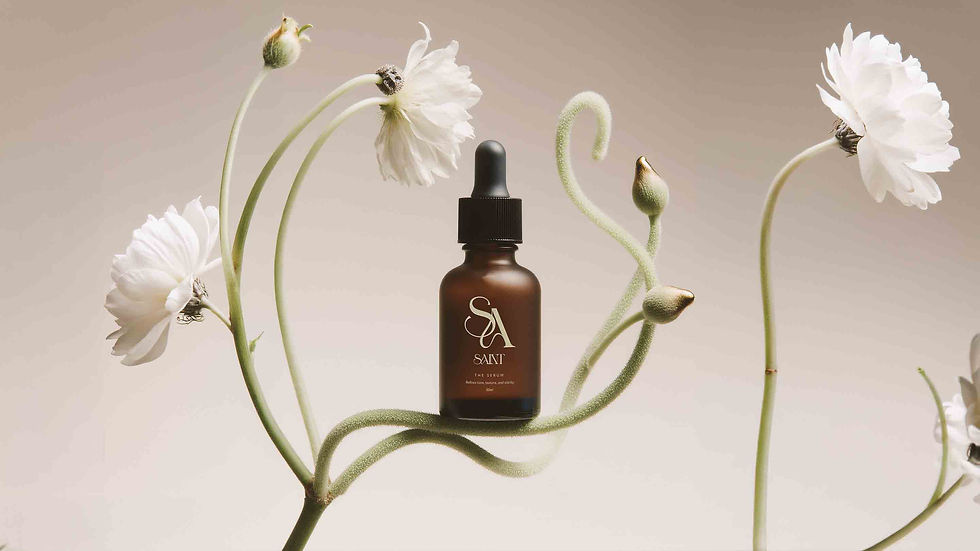
There is a version of skincare branding that looks like every other skincare brand. Soft sage green. A delicate serif. A minimalist logo with a leaf or a drop. Clean white packaging with a thin gold border. It is inoffensive, competent, and completely forgettable.
If you are launching or rebranding an independent skincare line right now, the temptation to reach for that aesthetic is understandable. It signals luxury. It signals clean. It signals that you have done your research. The problem is that so has everyone else, and your customer has seen that shelf before.
Finding the right brand identity designer for your skincare brand is not just about taste or budget. It is about finding someone who will push back on safe choices, ask harder questions, and build you something that earns attention without begging for it.
Here is what to actually look for.
The First Thing Any Brand Identity Designer Should Ask You
The first conversation with a brand identity designer should feel more like a strategy session than a portfolio review. Before any visual direction is discussed, a good designer wants to understand who your customer is, what your product genuinely does differently, and where you see the brand in five years.
If a designer leads with aesthetic references before understanding your positioning, that is a signal. It means they are designing from a visual library rather than from your brand's specific truth. For skincare in particular, where the market is deeply saturated and differentiation is everything, you need someone who begins with thinking and arrives at visuals, not the other way around.
Ask any designer you are considering: what questions do you ask before you start? Their answer tells you everything.
Someone Who Will Talk You Out of Looking Like Everyone Else
Independent skincare founders often come to branding projects with a reference folder full of brands they admire. That is not a bad starting point. The problem comes when the brief becomes "make mine look like that," and the designer obliges.
The most valuable thing a brand identity designer can do for a skincare brand is show you why differentiation is a commercial strategy, not just a creative preference. In a category where a customer might scroll past forty products before stopping, the brand that earns the pause is rarely the one that looks most like the category. It is the one that looks most like itself.
"The brand that earns the pause is rarely the one that looks most like the category. It is the one that looks most like itself."
This does not mean being loud or unconventional for its own sake. It means making deliberate choices that reflect something true about your brand, and having the confidence to stand behind them.

When we developed the identity for SAINT Skincare, the brief was built around the idea of gentle luxury. Not the kind of luxury that announces itself, but the kind that simply belongs. The result was a visual system designed to sit quietly on a bathroom shelf, completely at ease, without competing for attention. No overworked details. No gestures toward trends. Just a confident, considered identity that trusted the product to do its work. That restraint was a deliberate creative decision, and it required a designer willing to argue for less when the instinct might have been to add more.
A Specialist, Not a Generalist
There is a meaningful difference between a designer who works across every category and one who has developed a genuine understanding of the skincare and beauty space. That understanding is not just visual. It is commercial.
A specialist knows that your primary packaging and your secondary packaging need to work as a system. They know that what looks beautiful on screen may not survive production at your price point. They understand how your brand will read at thumbnail size on a Shopify listing, in a flat lay on Instagram, and on a physical shelf under retail lighting. These are not details a generalist will necessarily think to ask about.
When you are evaluating designers, look at whether their portfolio includes brands in adjacent categories to yours, and whether the work demonstrates an understanding of how luxury and premium consumer products actually communicate. Concept projects can be legitimate evidence of this, particularly for an independent studio, as long as the thinking behind them is clearly articulated.

Transparency About What You Are Actually Buying
Brand identity for a skincare brand is not a logo. It is a system: a wordmark, a color palette, a typographic approach, a visual language that extends across every touchpoint from your website to your product labels to your unboxing experience.
A designer who presents you with a logo and calls it a brand identity is not giving you what you need to launch or grow with consistency. Make sure any designer you work with is explicit about what deliverables are included, how many revision rounds are built into the process, and what you will actually own and be able to use independently when the project ends.
At the $5,000 and above investment level, you should expect a complete, considered identity system with clear usage guidance. If a quote is significantly below that, ask detailed questions about what is and is not included. In branding, as in skincare, you generally get what you pay for.
The Question Worth Asking Yourself First
Before you begin searching for a brand identity designer, ask yourself one honest question: are you looking for someone to execute a vision you already have, or someone to help you figure out what that vision should be?
If it is the former, you need a skilled executor who listens well and works efficiently. If it is the latter, you need a strategic creative partner who brings both design expertise and commercial thinking to the brief. Those are different engagements, and finding the right match starts with knowing which one you need.
The skincare brands that build lasting recognition are rarely the ones with the most beautiful packaging. They are the ones whose identity reflects something specific and true about who they are, built by someone who cared enough to find out what that was.
Studio Ruby Signorelli is an independent brand identity and packaging design studio based in California, working with independent luxury and premium consumer brands across skincare, beauty, fragrance, wine, and hospitality. Minimum project investment starts at $5,000. View our work or get in touch at rubysignorelli.com.


